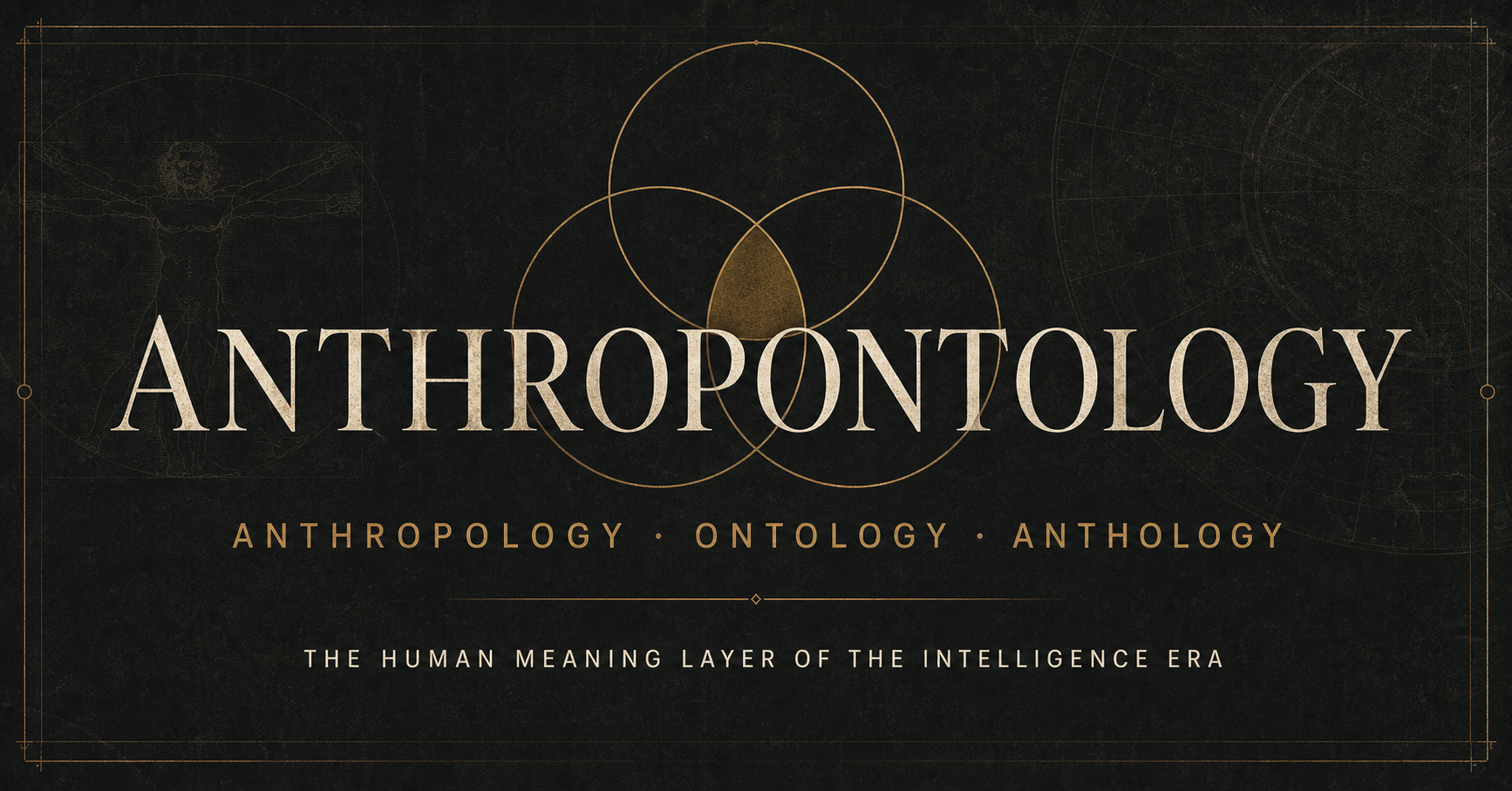
Anthropontology combines anthropology, ontology, and anthology: the study of humanity, the structure of meaning, and the gathering of human voices.
Mission
We build public language and cultural records that help people understand the intelligence transition without reducing human life to technology. The work is editorial, archival, visual, and ontological.
Why Three Pillars?
Anthropology explains humanity. Ontology explains structure. Anthology preserves meaning. Anthropontology exists at their intersection.
As intelligence becomes infrastructure, understanding humanity requires all three perspectives.
Three practices
The archive preserves testimony. The atlas maps systems. The anthology holds forms of knowledge that argument alone cannot contain. Together they support human agency and cultural continuity.
Public by design
This site publishes high-level frameworks, sanitized examples, essays, maps, and public vocabulary. It does not publish private datasets, operational logic, internal prompts, personal information, or proprietary implementation details.